
The multifunctional active behind Azepur99®

Azelaic acid (1,7-heptanedicarboxylic acid) is a naturally occurring dicarboxylic acid. It is found in cereals such as wheat, barley and rye, and extracts of these grains have been used for centuries in traditional skincare to even out pigmentation.

Today azelaic acid is one of the best documented multifunctional actives in cosmetic science. It combines antimicrobial activity with anti-inflammatory support and an effect on melanin production, which is why it appears in formulations for blemish-prone skin, redness-prone skin, uneven skin tone and scalp care.

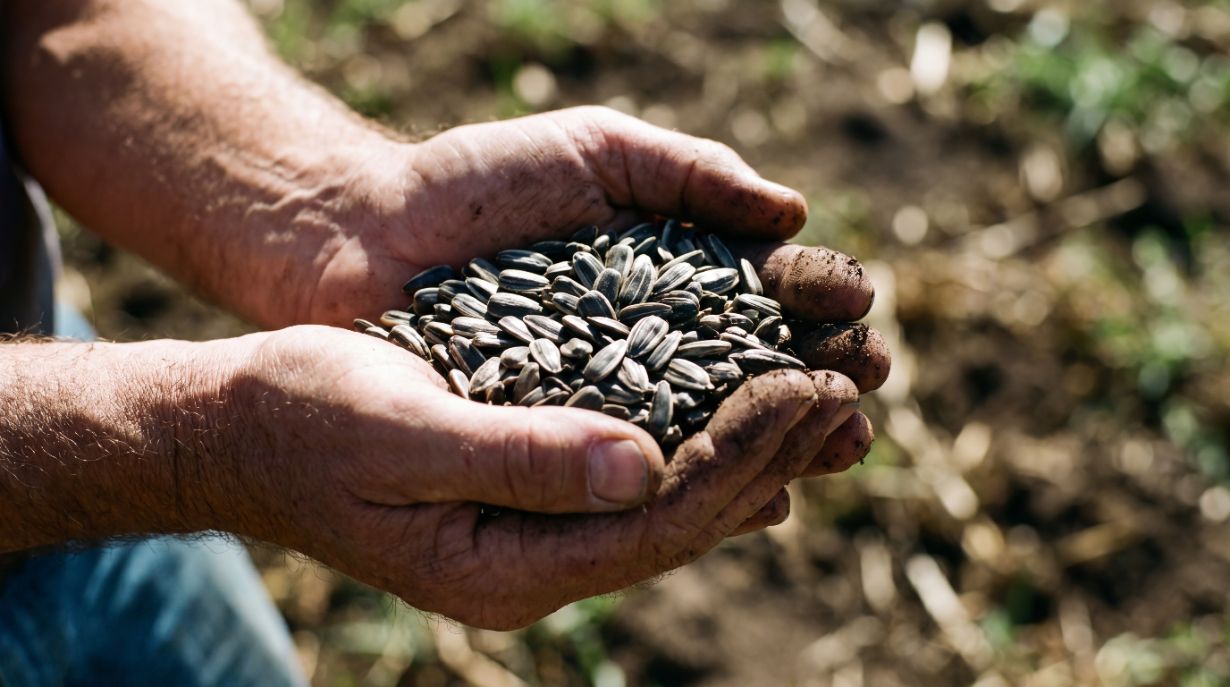
Azepur99® is our cosmetic grade of azelaic acid, produced in Europe from renewable sunflower oil at a purity of more than 99 percent.
Azelaic acid
Corporate Video
Video

Watch: the solubility of azelaic acid explained in 44 seconds

Origin and production

From sunflower oil to a purity above 99 percent

Azelaic acid extracted from natural sources is not commercially viable: the extraction is difficult and expensive. Azelaic acid is therefore produced by oxidation of oleic acid. The oleic acid we use is obtained from high oleic sunflower oil of European origin, which makes Azepur99® 100 percent biobased, palm free and fully traceable to its botanical source.

The oxidation of oleic acid yields azelaic acid and nonanoic acid. Our choice of starting material and our purification process result in a grade of more than 99 percent purity, where regular azelaic acid grades are specified at 85 to 90 percent. The result is an odourless, white, highly crystalline powder with a melting point of 110 °C, micronized to a controlled particle size for easy dispersion in cosmetic formulations.

Prefer a quick answer? Ask Ai-zeco, our assistant, directly from this page.
Azelaic acid

Physical and chemical properties

  • INCI name: Azelaic Acid
  • CAS number: 123-99-9
  • Molecular formula: C9H16O4, molecular weight 188.2 g/mol
  • Appearance: odourless, white crystalline powder
  • Melting point: 110 °C
  • Solubility in water: 2.1 g/l, pH dependent
  • Soluble in: glycerol and glycols; the mono and disodium salts are significantly more soluble
  • Formulation tip: micro-emulsions based on sorbitan esters with glycerol and lauryl alcohol as co-surfactants dissolve azelaic acid effectively
AI
Need help finding the right ingredient?

Tell our ingredient assistant what your formulation needs.

Ask our assistant

Regular azelaic acid grades are specified at 85 to 90 percent purity. Azepur99® is above 99 percent, and that difference is what a formulator feels in the texture.

Azeco Cosmeceuticals technical team

Cosmetic activity

What azelaic acid does in a formulation

  • Even skin tone: azelaic acid helps to even out skin pigmentation and is used in skin lightening and brightening concepts and to keep hyperpigmentation processes under control.
  • Blemish-prone skin: a natural antimicrobial that offers formulators an alternative to benzoyl peroxide and salicylic acid, working through antimicrobial activity and normalisation of keratinisation.
  • Redness-prone skin: demonstrated to reduce inflammatory lesions and erythema in skin prone to rosacea, and to inhibit neutrophilic reactive oxygen species.
  • Scalp and hair: a well known inhibitor of 5α-reductase, which limits the conversion of testosterone into dihydrotestosterone.
  • Skin comfort: anti-inflammatory properties that improve the complexion and decrease visible redness.
Ingredients

Our azelaic acid based actives

LadyPurple®

Microalgae-derived active supporting hydration, microbiome balance, and protection against environmental stress.

TetraGold®

Bioactive microalgae ingredient designed to support skin hydration, sebum balance, and barrier function.

T-pur99®

High-purity tetrahydrocurcumin designed to support visible skin performance and even skin tone.

Azepur99®

≥99% purity azelaic acid to support formulation performance. Suitable for skin and scalp applications.

Amazia™

Violacein-based biotechnology active for blemish-prone skin that respects the skin microbiome.

HydrActive™ Almond Oil

Bioactivated almond oil with clinically proven soothing and moisturising properties.

BioMic™ Fermentate

Postbiotic anti-ageing active obtained by precision fermentation.

Choose
product

Ai-zeco

Ask Ai-zeco about azelaic acid

Our AI assistant answers from our technical documentation, publications and formulation guides. Ask about purity, solubility, use levels or regulatory status, or pick a question below.

Ai

Still have a question about azelaic acid?

Type your question or pick one below. Ai-zeco answers from our documentation and publications.

Frequently asked questions about azelaic acid

What formulators ask us most about purity, mechanisms, use levels and solubility.


Azepur99® is supplied as a dry, free-flowing micronized powder. This format gives formulators full flexibility to disperse it in emulsions, pre-solubilise it in a solvent phase, or build clear concentrate solutions, depending on the target product.

With a typical purity of 99.7 to 99.9%, the remaining fraction consists of related dicarboxylic acids such as pelargonic acid, suberic acid and similar by-products of the production process. This high purity is one of the key quality differentiators of Azepur99®.

Azepur99® is micronized to a maximum particle size of around 20 micron. The fine, uniform particle size supports easy dispersion in emulsions and stable suspensions, and contributes to a pleasant skin feel in finished formulations.

Azepur99® has a purity greater than 99% by weight, with a typical purity of 99.7 to 99.9%. This is among the highest purity levels available on the market and meets the requirements for both cosmetic and pharmaceutical-grade azelaic acid (pharmaceutical grade requires a purity above 99%).

Azepur99® is obtained through oxidative cleavage of the double bond of the oleic chain in the triglyceride of sunflower oil. After several purification steps the material is micro-milled into a fine, free-flowing powder. The result is Azepur99®, a high-purity azelaic acid suitable for personal care products.

Yes. Azelaic acid is a naturally occurring straight-chain saturated dicarboxylic acid that is present in grains such as rye, wheat and barley. It is also produced naturally on healthy human skin.

The INCI name is Azelaic Acid. Its CAS number is 123-99-9, the molecular formula is C9H16O4 and the molecular weight is approximately 188.2 g/mol. Azelaic acid is a straight-chain saturated dicarboxylic acid, also known as nonanedioic acid.

Azepur99® is Azeco's trademarked cosmetic-grade azelaic acid: a free-flowing, micronized white powder with a purity greater than 99%. It is produced from European, high-oleic sunflower oil and is supplied to cosmetic brands, formulators and contract manufacturers for use in skin care, scalp care and hair care products. The pay-off is simple: the highest grade of azelaic acid for skin and hair care, when quality and reliability come first.

Azelaic acid is positioned as a gentle, sustainable alternative to benzoyl peroxide and salicylic acid. It is multifunctional (covering acne-prone, inflammation-prone, brightening and scalp applications), 100% biobased and palm-free, non-comedogenic and well tolerated. For brands looking to develop a clean, sustainable active story, it offers a compelling alternative to more aggressive ingredients.

Yes. Azelaic acid has antioxidant properties, which adds to its appeal as a multifunctional active in skin-care formulations.

Azelaic acid is not limited to Acne vulgaris. Studies indicate it is also effective on other forms, for example hidradenitis suppurativa (Acne inversa). Effectiveness depends on the concentration of azelaic acid in the product. For cosmetic products a concentration up to roughly 14% is generally used, while pharmaceutical products are based on 20%.

Azelaic acid is a potent 5-alpha-reductase inhibitor, the enzyme that converts testosterone into 5-alpha-dihydrotestosterone (DHT). It is also associated with scalp microbiome normalization and hair re-growth stimulation, which is why it is of interest for scalp and hair-care formulations.

Azelaic acid supports skin brightening and whitening through tyrosinase inhibition and melanin reduction, the pathways involved in the formation of pigment. This makes it a popular active for products targeting hyperpigmentation and uneven skin tone.

Azelaic acid helps balance acne-prone skin through several mechanisms relevant to formulators. It has antibacterial activity that targets specific opportunistic organisms such as Cutibacterium acnes (formerly Propionibacterium acnes) and Staphylococcus epidermidis, it is comedolytic, and it supports sebum regulation. Its activity is limited to opportunistic organisms and does not disturb the commensal skin flora.

Studies report that azelaic acid at concentrations of approximately 3 to 10% can support hair and scalp formulations. Particularly good results are described when azelaic acid is combined with zinc sulphate and vitamin B6.

Published data show positive results for skin lightening, brightening and the appearance of dark spots using approximately 3 to 10% by weight of azelaic acid in the formulation.

Cosmetic products containing roughly 5 to 15% by weight of azelaic acid are commonly used for rosacea-prone and redness-prone skin. As a reference point, FDA-approved pharmaceutical products for rosacea are based on a 15% azelaic acid content. Higher concentrations generally deliver stronger performance.

For cosmetic products, a concentration of up to about 14 to 15% by weight is generally used, and published studies indicate azelaic acid remains effective for blemish-prone skin at these levels. For reference, pharmaceutical (drug) products approved by the U.S. FDA for acne are based on 20% azelaic acid creams. Generally, the higher the concentration, the stronger the performance of the product.

In pure powder form azelaic acid is a mild skin and eye irritant, so standard laboratory handling practices apply. According to the classification limits in its REACH registration dossier, finished products containing up to 15% by weight of azelaic acid are not classified as irritant. Azelaic acid has no CMR (carcinogenic, mutagenic or reprotoxic) properties. Always refer to the current safety data sheet for handling guidance.

Yes. Azelaic acid is frequently combined with other actives. For scalp and hair-care formulations, for example, good results are reported when azelaic acid is combined with zinc sulphate and vitamin B6. As always, confirm compatibility and stability of your specific combination during development.

Azelaic acid is considered non-comedogenic and is widely used in formulations for acne-prone skin. Its comedolytic profile and oil-free formulation options make it a popular choice for products aimed at congested or blemish-prone skin.

Azelaic acid has self-preserving properties and shows specific antibacterial activity against certain organisms. It is not, however, a broad-spectrum preservative, so a complete preservation strategy should still be evaluated for water-containing formulations.

Azelaic acid is thermally stable under normal cosmetic processing conditions, which makes it suitable for both cold-process and heated formulation routes. As with any active, validate your specific process and combination of ingredients during stability testing.

The alkali salts of azelaic acid are reasonably soluble in water, although a co-solvent such as propylene glycol is recommended to support stability in the final product.

Yes. By pre-solubilising azelaic acid in a glycol or glycerin-based phase, you can build oil-free serums containing roughly 10 to 20% by weight of azelaic acid while keeping the system clear and stable. This makes azelaic acid well suited to lightweight, non-greasy product formats.

Once azelaic acid is dissolved in 1,2-glycols or glycerin, the solution can be thickened into a fully transparent gel using rheology modifiers such as:
  • Hydroxypropylcellulose (HPC)
  • Carbomers (anhydrous systems only)
  • Sodium Polyacryloyldimethyl Taurate

Azelaic acid has poor solubility in water. Solubility can be greatly improved by pre-solubilising it in an organic phase based mainly on glycols, glycerin, poloxamer or surfactants such as alkyl glucosides. With this approach it is possible to obtain oil-free serums with a high concentration of azelaic acid (in the region of 10 to 20% by weight).

Sign up for the Knowledge Base

The Essential Guide, technical files and publications on azelaic acid, free after registration.

VIP library

Go deeper: technical documentation on azelaic acid

The Essential Guide, the Technical Information File and our whitepaper on high dosage formulations. Register once for free and download everything you need.
Bezoeker is ingelogd
Download the Azepur99® Essential Guide
Unlocked for you

Download the Azepur99® Essential Guide

Technical guidance for formulators covering applications, formulation strategies, solubility and cosmetic positioning of azelaic acid.

PDF · 26 pages · English

Download PDF
Saved to your account
Download the Technical Information File
Unlocked for you

Download the Technical Information File

Technical guidance including dissolution recommendations, processing advice and frequently asked formulation questions.

PDF · 26 pages · English

Download PDF
Saved to your account
Download the whitepaper: skincare products with a high dosage of azelaic acid
Unlocked for you

Download the whitepaper: skincare products with a high dosage of azelaic acid

A deep dive into the effects of high percentage azelaic acid in skincare products, including an oil free serum formulation with 12% azelaic acid.

PDF · 26 pages · English

Download PDF
Saved to your account

Request a sample kit

Evaluate our ingredients in your own formulation process. Request a sample or contact our team for technical information.

This site is registered on wpml.org as a development site. Switch to a production site key to remove this banner.